
Critical Care Fellowship Program
Program Overview
The mission of the Critical Care Medicine Fellowship Program at Memorial Regional Hospital/Memorial Healthcare System is to provide excellence in graduate medical education so that our fellows become highly competent physicians, educators, and leaders in the field of critical care medicine. Our graduates will advance the mission of Memorial Healthcare System, which is to heal the body, mind, and spirit of those we touch. We aim for our fellows to act as leaders and agents of change, advancing the delivery of exceptional, compassionate, and evidence-based care to the diverse communities of South Florida and beyond.
Learn More About Our Critical Care Services
Visit Critical Care Services PageA Message From Our Program Director

Welcome to the Critical Care Medicine Fellowship Program at Memorial Healthcare System. I am delighted that you are considering our program as you take the next step in your career in critical care medicine.
Our goal is to develop outstanding intensivists who possess the clinical knowledge, procedural expertise, judgment, leadership skills, and compassion necessary to care for the most critically ill and medically complex patients. We believe that exceptional critical care training is built upon broad clinical exposure, progressive responsibility, strong mentorship, and the opportunity to learn within a diverse, high-acuity healthcare system.
During our two-year fellowship, fellows will experience an extensive range of critical care environments, including medical and surgical intensive care, neurocritical care, cardiac surgical intensive care, and trauma. This breadth provides exposure to critically ill patients across virtually every major discipline of medicine and surgery.
Admissions
- ERAS Program ID: Coming soon
- NRMP Number: 2085142F0
- Fellowship Length: 2 years
- Trainees Accepted: 4 per year
Education
The Critical Care program will provide fellows with exposure to a diverse and representative patient population through training across multiple intensive care units within the health system. Fellows will rotate through medical, surgical (including complex vascular and renal transplant), cardiac, neurocritical care, and trauma ICUs that care for patients with a wide spectrum of acute and complex critical illnesses.
The Critical Care program serves a large and diverse community with varied socioeconomic, cultural, and ethnic backgrounds, ensuring fellows gain experience caring for patients across a broad demographic spectrum. This diversity exposes fellows to differences in disease presentation, health disparities, and complex social determinants of health that influence critical illness and recovery.
Fellows will work with multidisciplinary teams that include intensivists, surgeons, cardiologists, neurologists, anesthesiologists, nurses skilled in critical care instrumentation, respiratory therapists, pharmacists, laboratory medicine professionals, and other allied health professionals. This collaborative care model ensures fellows participate in the comprehensive management of critically ill patients with complex medical and surgical conditions.
The combination of varied ICU settings, diverse patient demographics, and a high-acuity referral base ensures that fellows experience the broad spectrum of diseases and clinical conditions managed by critical care subspecialists while also reflecting the needs of the community served by the health care system.
The Critical Care Fellowship will offer a structured core curriculum conference series designed to provide comprehensive coverage of the fundamental principles of critical care medicine.
The curriculum will follow a recurring schedule throughout the academic year and will include dedicated weekly didactic sessions led by critical care faculty and invited subspecialists.
Core curriculum topics will include mechanical ventilation, shock and hemodynamics, sepsis and infectious diseases in the ICU, renal replacement therapy, neurologic critical care, cardiovascular critical care, sedation and analgesia, nutrition, ethical and end-of-life care, and quality and patient safety.
Educational sessions will incorporate case-based discussions, evidence-based reviews of current literature, and interactive teaching to encourage critical thinking and the application of knowledge to clinical care.
Additional educational conferences will include morbidity and mortality conferences, case conferences, simulation-based learning sessions, and critical care journal club.
Fellows who are unable to attend a conference will have the opportunity to review the educational content. Slides, materials, and articles presented during didactic conferences will be shared with fellows through email and MedHub. Summaries from morbidity and mortality conferences, journal club, and other case conferences will also be made available.
Learn More About Our Critical Care Services
Visit Critical Care Services PageFaculty
- Daniel Mayer, MD (Program Director)
- Lance Cohen, MD (Core Faculty - Critical Care)
- Martinus Dyrud, DO (Core Faculty - Cardiac Critical Care)
- Shelly Miller, MD (Core Faculty - Pulmonary and Critical Care)
- Aniruddha Sahu, MD (Core Faculty - Critical Care)
- Alvaro Visbal, MD (Core Faculty - Critical Care)
- Charles Bonanno, MD (Teaching Faculty - Nephrology)
- Benjamin Byriel, MD (Teaching Faculty - Gastroenterology)
- Paula Eckardt, MD (Teaching Faculty - Infectious Disease)
- Benjamin Houseman, MD, PhD (Teaching Faculty - Anesthesiology)
- Robert Hunter, MD (Teaching Faculty - Obstetrics and Gynecology)
- Syeda Hussain, MD, MPH (Teaching Faculty - Internal Medicine)
- Atif Hussein, MD (Teaching Faculty - Hem/Onc)
- Leonid Melnitsky, DO (Teaching Faculty - Emergency Medicine)
- Jonathan Roberts, MD (Teaching Faculty - Cardiac Services)
- Andrew Rosenthal, MD (Teaching Faculty - Surgery)
- Buse Sengul, MD (Teaching Faculty - Neurology)
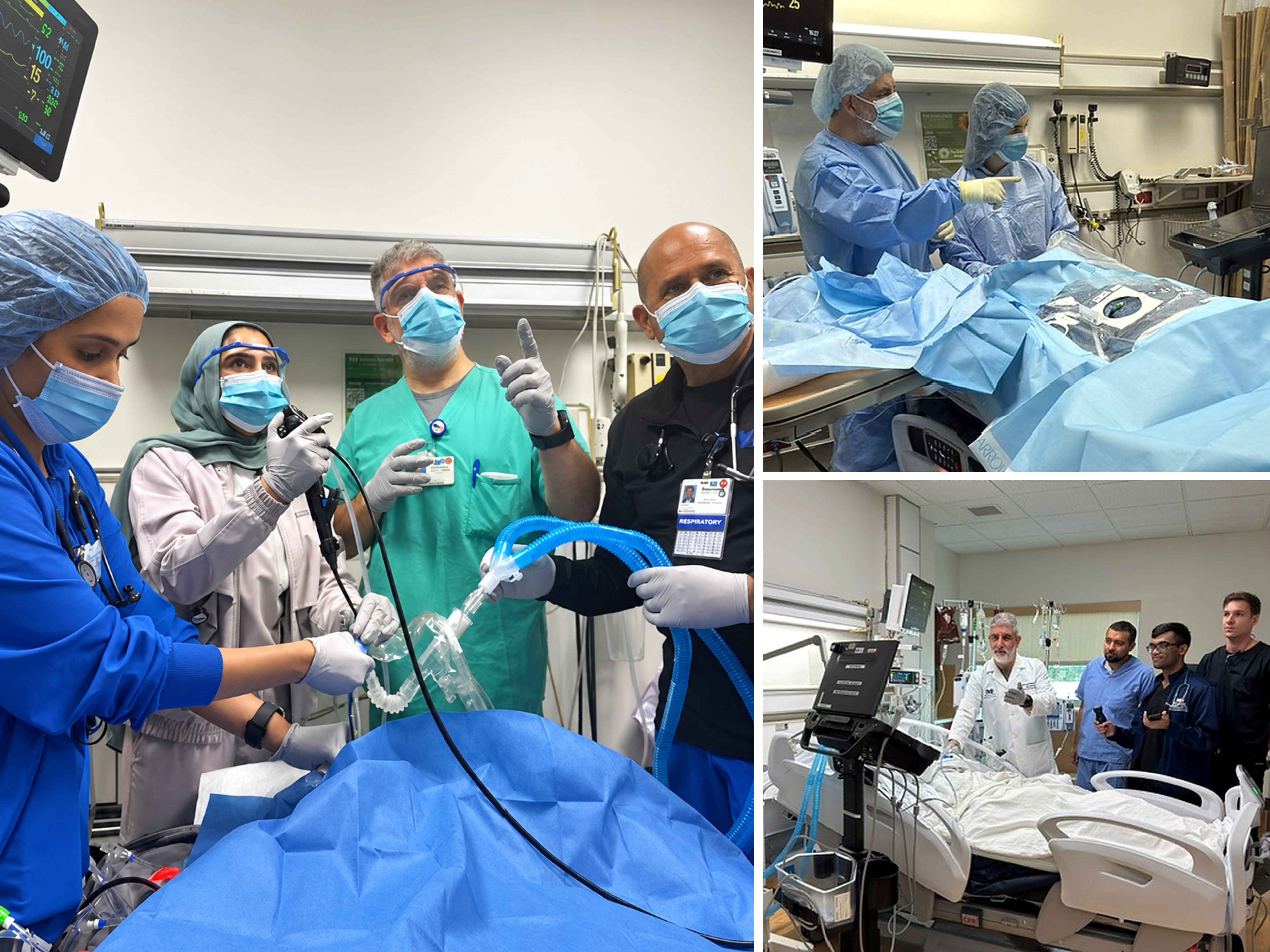
Our Trainees In Action

A Sunny Lifestyle Feature
Every day feels like a holiday when you live in South Florida. Discover everything we have to offer.