
Should You See a Neurologist or Neurosurgeon?
February 10, 2026
If you’re experiencing headaches, dizziness, memory problems, or other neurological changes, you may wonder which type of specialist can help. Should you start with a neurologist, or do you need to see a neurosurgeon?
Neurologists and neurosurgeons both treat conditions of the brain, spinal cord, and nerves, but they do so in different ways.
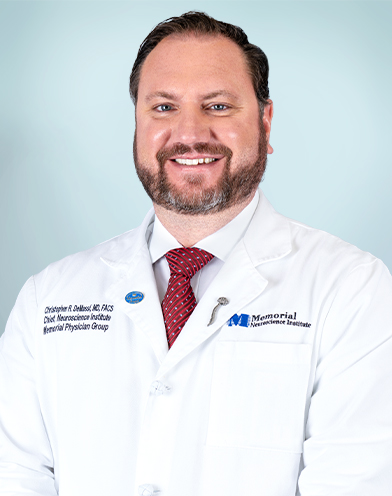
“Neurologists use non-surgical treatments, such as medications, injections, rehabilitation therapies, and assistive devices,” says Christopher DeMassi, MD, chief of Memorial Neuroscience Institute and Adult Neurosurgery, and medical director of the Spine Center. “Neurosurgeons, on the other hand, provide a wide range of specialized surgical treatments.”
Knowing which doctor is right for you isn’t always obvious. The right choice can depend on your symptoms, diagnosis, and response to treatment. Use the following information to help you understand what each specialist does and when you might need to see them.
When to See a Neurologist?
A neurologist is usually the first specialist you’ll see if you have neurological symptoms.
“Neurologists take time to understand what you’re experiencing and identify the cause,” says Dr. DeMassi.
Your visit may include a neurological diagnostic exam to evaluate things like reflexes, balance, and memory. The neurologist may also order neurodiagnostic tests to provide more detailed information.
Once a diagnosis is confirmed, the neurologist works with you to develop a personalized treatment plan. They also provide education for you and your family and help connect you to supportive services when needed.
Some common reasons to visit a neurologist include:
Back and neck pain can be shooting, burning, or aching. You may also feel tingling, numbness, and weakness in your arms and/or legs. The pain may be worse with certain movements or present all the time. Some of the common causes may include:
- Wear and tear on your joints
- Spinal injuries that damage the vertebrae, discs, nerves, muscles, and ligaments
- Compressed nerves on the spinal cord and branching nerves
- Congenital spine conditions
- Infections around the spinal cord (i.e., meningitis)
- Spinal tumors
A neurologist can help determine the cause and guide your next steps.
Feeling dizzy or unsteady can be unsettling and increase your risk of falls. These symptoms can be caused by conditions affecting the brain, inner ear, cardiovascular system, or even a medication you’re taking.
“Finding the cause can be like piecing together a puzzle,” says Dr. DeMassi. “Once we understand what’s happening, we can help you get the care you need.”
Frequent headaches can interfere with work, school, and everyday life. Conditions such as migraines and tension headaches may occur on their own or because of another underlying issue.
In addition to traditional pain relievers (i.e., ibuprofen, acetaminophen), neurologists offer a variety of newer therapies, like botulinum toxin injections, nerve blockers, and neuromodulation devices. These treatments are often effective, even if you’ve had headaches for a long time.
Changes in memory, thinking, or awareness can happen suddenly or gradually. A sudden change may signal a medical emergency, such as a stroke or serious brain injury. Temporary changes in memory can occur with seizures, migraine headaches, and other conditions.
Longer-term memory loss and confusion are often related to other complex neurological diseases, including:
- Brain tumor
- Dementia
- Multiple sclerosis
- Vascular problem, such as an arteriovenous malformation (AVMs)
A neurologist can help determine the cause and guide your next steps.
Involuntary shaking, uncontrollable muscle contractions, and unusual posture (dystonia) are symptoms of movement disorders.
The most common movement disorders are Parkinson’s disease and essential tremor. People with Parkinson’s disease may experience tremors, muscle spasms, difficulty swallowing, and changes in speech. Medications and rehabilitation therapies can help manage symptoms. If these treatments become less effective, your neurologist may refer you to a neurosurgeon to discuss whether surgical options could help.
Unexplained muscle weakness can be a sign of a neurological condition, such as:
While many of these conditions don’t yet have a cure, treatment can sometimes slow progression, manage symptoms, and improve quality of life. Early evaluation can make a meaningful difference.
Seizures can be caused by epilepsy or other factors, such as stress, illness, or head trauma. They can differ from person to person, ranging from full-body jerking movements to brief episodes of staring or confusion.
“If you experience even a single seizure, talk to your primary care provider,” says Dr. DeMassi. “They will likely refer you to a neurologist for a complete evaluation.”
When to See a Neurosurgeon?
You may consult with a neurosurgeon early in your care or after other treatments haven’t provided enough relief. Seeing a neurosurgeon doesn’t always mean you need surgery.
“Neurosurgeons often help determine whether surgery is appropriate, or if non-surgical options are still the best choice,” says Dr. DeMassi.
Neurosurgeons perform highly complex procedures while taking care to protect the delicate structures of your nervous system.
Some of the specialized surgical treatments they offer include:
Surgery is often one part of a comprehensive treatment plan for benign and malignant brain tumors. Neurosurgeons use advanced imaging, monitoring, and microsurgical techniques to remove the tumor while protecting healthy brain tissue and nerves.
For people with brain cancer, neurosurgeons work closely with neuro-oncologists and other specialists to incorporate surgery into the overall care plan.
Deep brain stimulation (DBS) can be life-changing for some people with movement disorders, namely Parkinson’s disease and essential tremor. DBS is a battery-powered device that’s surgically implanted into the brain. It delivers stimulation to specific areas of your brain that control movement, regulating and disrupting abnormal activity to reduce tremors, stiffness, and slowness.
“DBS isn't a cure, but it can provide remarkable symptom relief for people who don’t respond well to medications,” says Dr. DeMassi.
When medications don’t effectively control seizures, the next step in treatment may be epilepsy surgery. Advances in technology have improved the safety and precision of these procedures, allowing surgeons to target specific areas of the brain.
Devices, such as DBS and neurostimulation, are two surgical options for epilepsy treatment. One example of neurostimulation is the NeuroPace RNS® system, which involves placing thin wires in the area of the brain where seizures start. A small device implanted in the skull detects seizure activity. It then sends an impulse to stop seizures before they spread.
Most neurovascular conditions, such as strokes, brain aneurysms, and arteriovenous malformations, can be treated from inside your blood vessels. Because neurointerventional surgery is minimally invasive and doesn’t require open incisions, recovery is often faster and less painful.
“We guide wires and instruments through a blood vessel, usually in your wrist, to reach the affected area,” says Dr. DeMassi.
Most people with back and neck pain improve with non-surgical treatments. When pain persists, nerve compression worsens, or a spinal condition is complex, spine surgery may be recommended.
There are many types of spine surgery, and neurosurgeons carefully tailor each procedure. Follow-up care and neurorehabilitation therapy play an important role in recovery and long-term outcomes.
Not Sure Where to Start?
If you or a loved one is experiencing neurological symptoms, start by talking to your primary care provider. They can help guide you to the right expert.
Your Health. Our Priority.


